

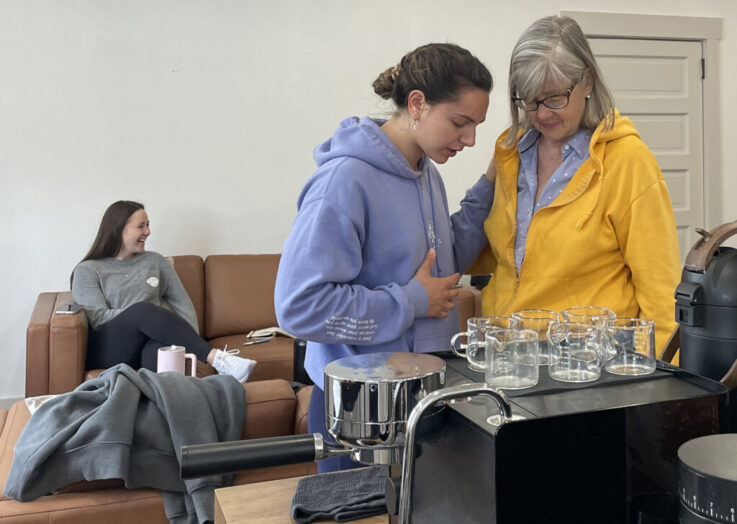
GenSend student missionaries in Pittsburgh this summer started a coffee shop. Others, in Halifax, Nova Scotia, focused on college campuses. Still others in Cincinnati played pickleball as a way of connecting with community members.
GenSend participants are Southern Baptist college students on mission through the North American Mission Board (NAMB) for up to eight weeks each summer. Southern Baptists began placing student summer missionaries in churches in 1944 as a way to help churches suffering from the absence of young adults who were serving in World War II.
GenSend, which began in 2013, carries on the tradition today but with a specific focus on placing students in church plants to help them with community outreach and other evangelism efforts.
“GenSend is a transformative summer mission experience where college students serve alongside Send Network church plants in strategic North American cities, growing as disciples, learning to live on mission, and discovering God’s calling for their lives,” explained Jon Chasteen, director of NextGen Mobilization for NAMB’s Send Network.
This summer, 213 GenSend summer missionaries served through the North American Mission Board (NAMB) at 37 church plants in 14 locations throughout North America, including this group that served in Pittsburgh.
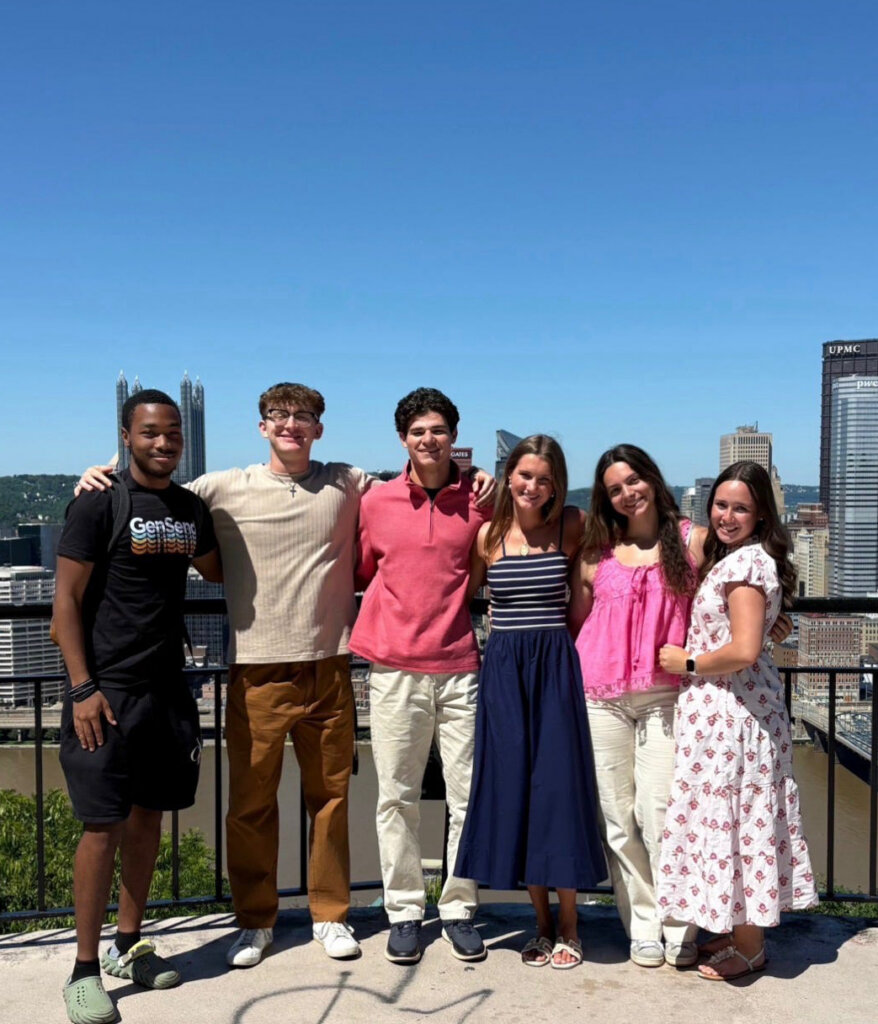
A 2020 church plant, Steel City Church has grown to about 125 attending Sunday morning worship. A team of six GenSenders were assigned to engage with middle-school students to build the church’s Incline student group. They also visited the campuses of the University of Pittsburgh and Carnegie Mellon University, as well as a neighborhood called Shadyside, meeting people and engaging in Gospel conversations.
And since there was no coffee shop near the church, the GenSend students started one for the summer, open Monday through Wednesday from 9 a.m.-noon. Two GenSenders cleaned; two served; and two talked with customers.
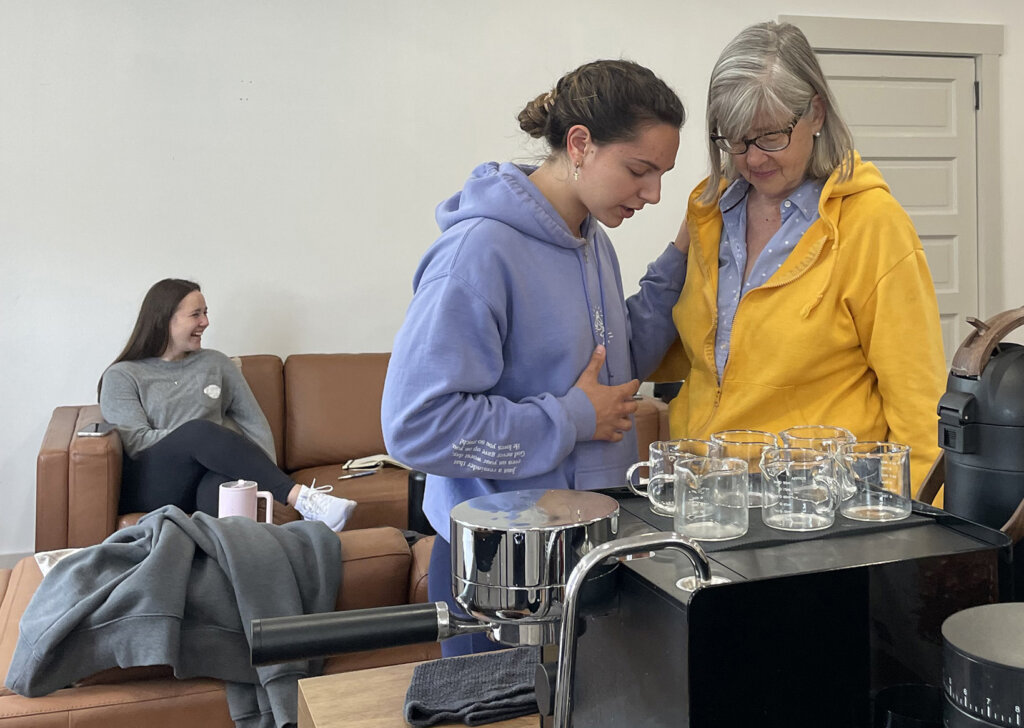
“I was talking to two sweet women and asking them their favorite places to eat,” GenSender Gabriella Campbell said. “This led to me being able to share my story and why I was in Pittsburgh. I was able to pray for them and their day, and for the Lord to move in their hearts.
“A few hours later I received an email from one of the women,” Campbell continued. “She said she admired how my faith pushed me to pray for them. I didn’t get to see her again, but it was one of many examples this summer of God using us.”
Bethany Egolf, ministry coordinator at Steel City Church, worked with the GenSend students.
“GenSend develops courageous disciples who break down barriers of fear for the sake of God’s Kingdom,” Egolf said. “GenSend missionaries help our people learn and live the ways of Jesus every day while boldly sharing the Gospel throughout our city. Through the students’ time and dedication, they are helping us reach more people with the hope of Christ and make a lasting Kingdom impact in Pittsburgh.”
Port City Church, launched in 2023, has grown to about 280 attendees and is preparing to launch a downtown campus. An eight-person GenSend team spent the summer helping lay the groundwork.
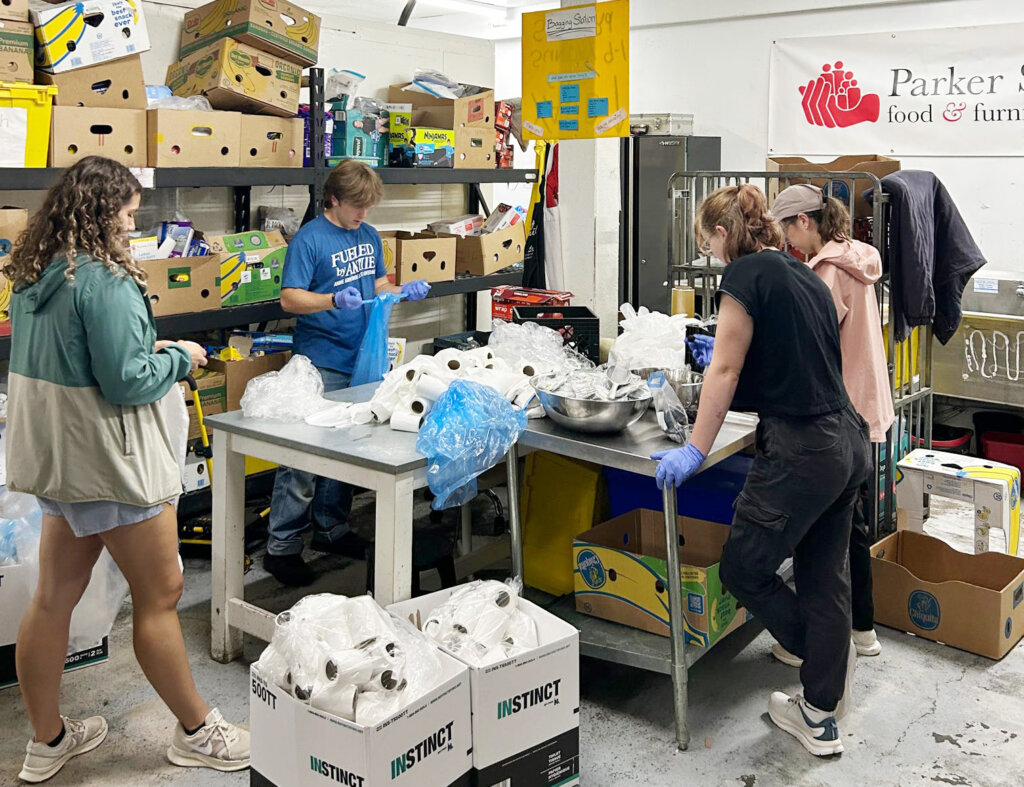
Throughout their time in Halifax, the students shared the Gospel across the city several times a week, served at a food bank, prayer-walked various neighborhoods, and helped with a kids camp. Their capstone project was a strategy to help Port City reach new students at Dalhousie and Saint Mary’s universities this fall.
Early on, Anthony Roubique, one of the GenSenders, met a man at a bus stop who had hurt his leg, lost his job and his life fell apart. “I got to hear about his family, wife and two or three little kids,” Anthony Roubique said. “I shared the Gospel, gave him a New Testament and asked, ‘Hey man, can I pray for you?’”
After they prayed, the man pulled out his phone and called his wife, whom he hadn’t spoken to in a while. “It was really powerful,” Roubique said. “You learn so much about how big God is and how small we are. It was a very humbling experience; showed me I need to rely on God to do anything good.”
Mike Esa is a church planting resident at Port City Church and city mobilizer for the team.
“GenSend teaches students to approach all of life on mission and to choose where they’ll live and work based on gospel need rather than financial gain,” Esa said. “A student who spends six weeks serving alongside church planters never looks at their life the same way again.
“The real impact is what comes next,” Esa continued. “Some of them will spend their lives on mission because of this summer. GenSenders aren’t just summer help; they’re the next generation of missionaries and church planters God is raising up.”
“Pickleball is growing in this area,” said GenSender Baylee Hedgepath. “As we play we get to know them and use those opportunities to engage with them and start a conversation about the Gospel. The demographics we’re looking at is 20s to early 30s. We learned 7:30-10 gives us the best opportunity to meet them.”
Hedgepath was one of seven GenSenders helping to grow Bridge City Church, which started in 2021. About 50 people attend Sunday services.
“We were at the pickleball courts,” Hedgepath said. “She was working at a sno-cone stand. ‘It enlightens me,’ she said after I told her who Jesus is. It was the first time she was hearing the Gospel. That was encouraging for me and my group, to take the step [of sharing the Gospel] even if you don’t know where it’s going to go.
“Bridge City helped me learn about boldness in walking with the Lord,” Hedgepath said. “How to use anything and everything to share the Gospel.”
Kirk Kirkland is GenSend’s city mobilizer and is a Cincinnati sports chaplain.
“I work with athletes,” Kirkland said. “It is rare that a 20-year-old breaks into the big leagues with success. More often, that young man takes years to refine his skills through the minor leagues. I see GenSend in a similar light. The fully equipped church planter rarely parachutes into our city. GenSend is a missional farm team system that allows students to fall in love and learn how to be a missionary within a city in need of church planters and planting team members.”
For more information about GenSend, see gensend.org.
This article was originally published by Baptist Press.