
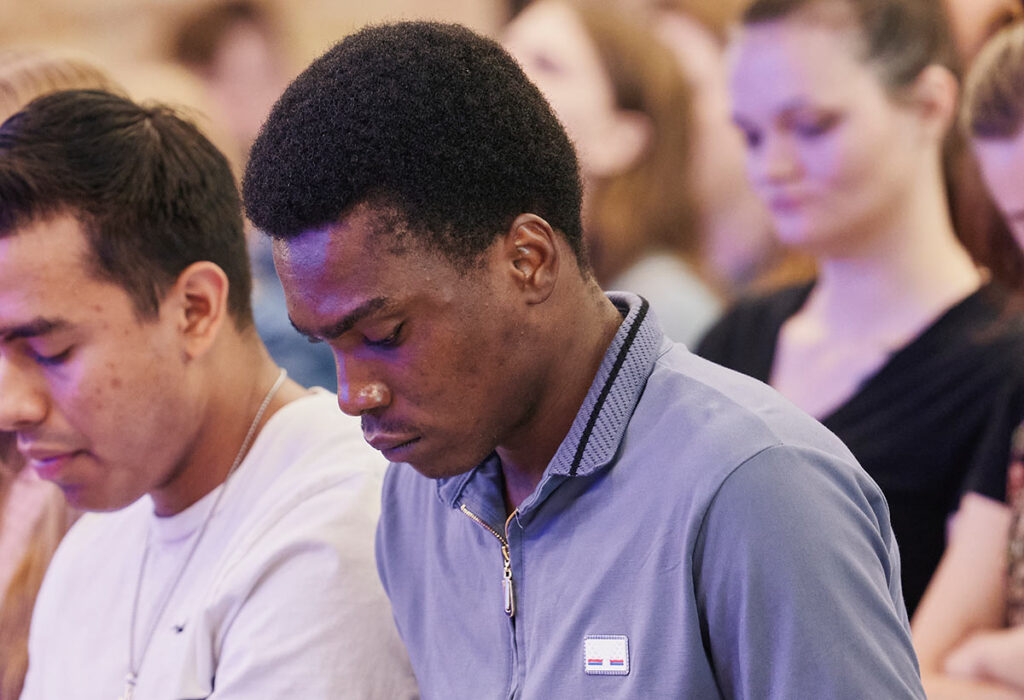
If we’re going to talk about building a culture of evangelism, we have to start with the soul. That may feel unexpected, but it’s essential. If we’re not spiritually healthy, we will struggle to lead healthy ministries. The condition of our soul always shapes the culture we create. Healthy leaders are far more likely to cultivate environments where the gospel is lived out and shared consistently.
There’s a reason airlines give the same safety instructions every time you fly. When the oxygen masks drop, you’re told to put yours on first before helping anyone else, even your own child. That runs against instinct, but the reasoning is simple: you can’t help someone else if you’ve passed out.
Ministry works the same way. If we’re spiritually depleted—if we’re running on fumes—we will not be effective in leading others. Before we focus on reaching people, we need to assess what’s happening within us. That’s where the S.O.U.L. framework comes in: salvation, overflow, unmasking, and longevity.
Salvation: Don’t Outgrow the Gospel
Salvation is where it begins. In 2 Corinthians 5:17–18, we’re reminded that anyone in Christ is a new creation, and then we’re immediately told we’ve been given the ministry of reconciliation. That order is intentional. Before God ever gave you a title, a platform, or a position, He called you to Himself. Your primary identity is not as a leader, a pastor, or a minister—it’s as someone who belongs to Jesus. That truth is easy to lose sight in ministry.
Over time, it’s tempting to measure ourselves by outcomes such as attendance, decisions, or growth, but your identity is not in results. It’s in Christ. You cannot give away what you do not currently treasure. That’s why we never move past the gospel; we only grow deeper in it. A simple but revealing question is this: When was the last time you thanked God for saving you? Not for what He’s doing through you, but for what He’s done in you. That kind of gratitude re-centers your heart and realigns your ministry.
Overflow: Lead from Fullness, Not Emptiness
Overflow is where many leaders struggle. Too often, we’re not leading from overflow; we’re leading from what’s left over. We spend our time pouring into others while neglecting our own spiritual health. Eventually, that leads to exhaustion.
In Psalm 23:5, the picture of life with God is not barely getting by, but a cup that overflows. That’s the posture we’re called to lead from. We are at our best when our ministry flows out of our personal worship of Jesus, not just our responsibilities for Him.
That raises some necessary questions:
- Are you spending time in Scripture to hear from God or only to prepare for others?
- Are you praying in dependence or only in routine?
- Are you creating margin for rest, for stillness, and for Sabbath?
These are not optional disciplines; they are the source of spiritual vitality. If we want to lead people to Jesus, we must spend time with Him ourselves.
Unmasking: Choose Honesty Over Image
Unmasking is where things become more personal. One of the most subtle dangers in ministry is the pressure to appear like we have it all together. We learn to wear masks of success, busyness, or strength while hiding what’s really going on beneath the surface. But those masks isolate us, and they ultimately undermine both our health and our leadership. Authenticity matters, especially to the next generation. People aren’t looking for perfection; they’re looking for honesty.
Unmasking starts vertically. We must speak honestly to God. There’s no value in pretending. He already knows. Then it moves horizontally. We need trusted people in our lives who know the real us, people we can be transparent with. Scripture calls us to carry one another’s burdens, but that only happens when we’re willing to share them. If no one knows where you’re struggling, no one can walk with you through it.
The question becomes: Who has access to your real life? If the answer is no one, that’s something to address, not ignore. And if God has already provided those relationships, they’re worth cultivating intentionally. Unmasking isn’t weakness; it’s how we remain healthy over time.
Longevity: Finish the Race Well
Longevity ties it all together. Ministry is not just a calling to start; it’s a calling to finish well. Philippians 1:6 reminds us that God is faithful to complete the work He began, but we are still called to run the race with endurance. Too many leaders begin with intensity but struggle to sustain it. They pace themselves for a sprint instead of a lifelong calling. Finishing well requires intentional rhythms—time with the Lord, rest, and practical care for your body and mind. These aren’t distractions from ministry; they are what make long-term ministry possible.
There’s also a necessary shift in focus. Instead of chasing width, such as platform, visibility, or growth, we need to prioritize depth. Deep discipleship, deep relationships, and deep dependence on God. When depth becomes the focus, we can trust God with the breadth. That kind of ministry is not only fruitful; it’s sustainable.
At the end of the day, a culture of evangelism is not built primarily through strategy, programming, or events. It is formed through leaders whose lives are rooted in the gospel, sustained by the presence of God, marked by authenticity, and committed to endurance.
So, before you evaluate your ministry, evaluate your soul.
- Are you anchored in your salvation or drifting toward performance?
- Are you leading from overflow or from exhaustion?
- Are you living honestly or hiding behind a mask?
- Are you building for longevity or burning out too quickly?
These are the questions that shape everything else. Because healthy leaders are far more likely to lead healthy ministries—and healthy ministries are where evangelism thrives.
____________________________________________________________________________________
Adapted from the Creating a Culture of Evangelism Online Course. Learn more and take the course for student leaders or collegiate leaders.
Published May 28, 2026
