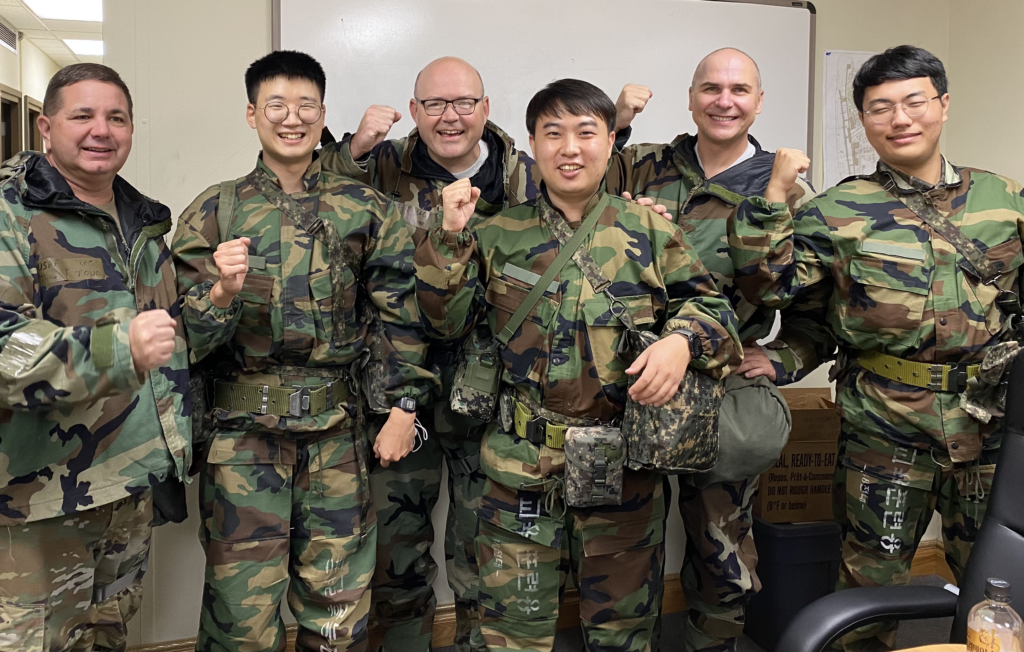
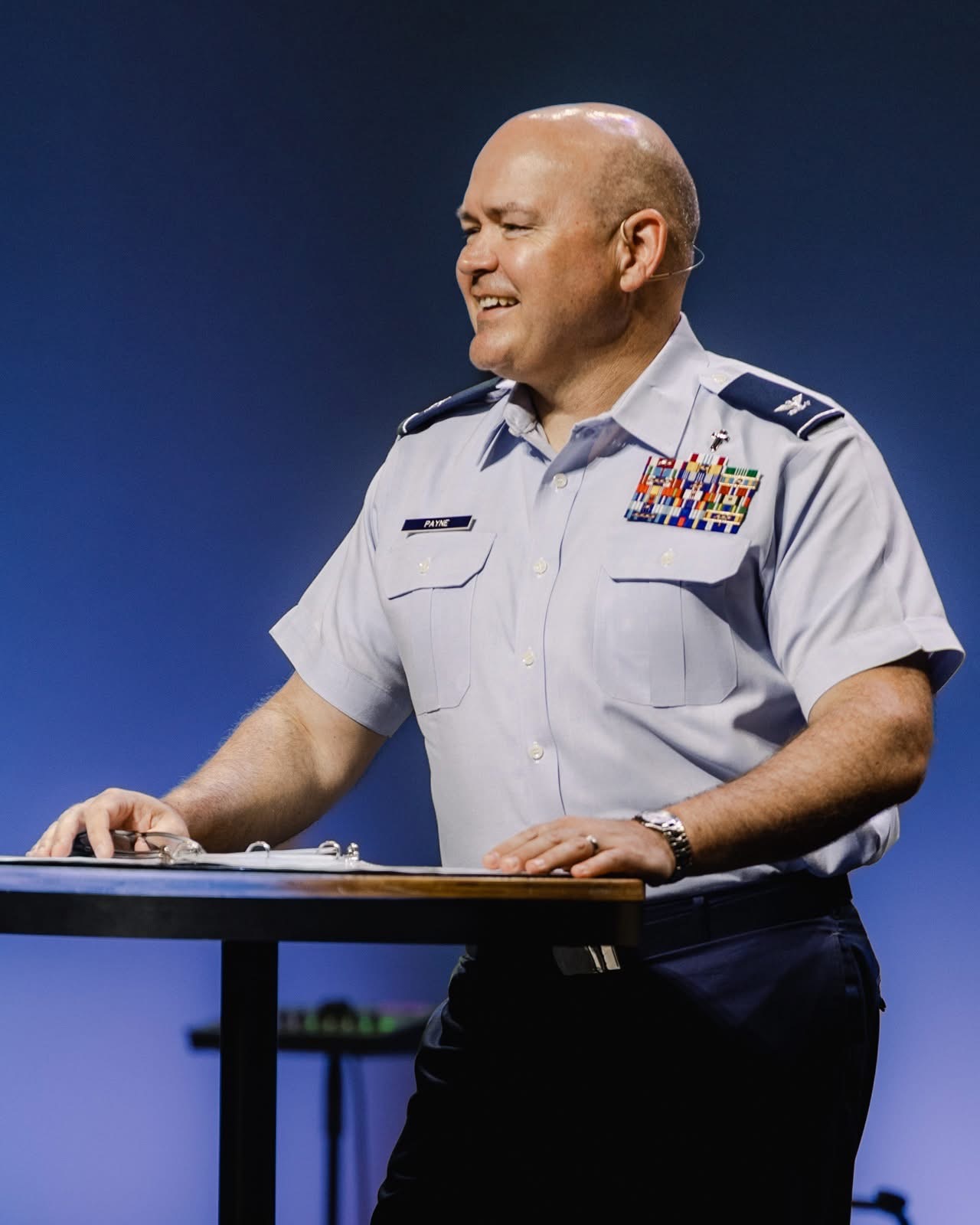
For more than two decades, Chaplain Col. Joshua Payne has carried the gospel into places most churches will never physically go. He has preached in uniform, prayed in war zones, counseled service members in moments of crisis and exhaustion, and planted congregations that exist only as long as the mission requires.
His ministry has unfolded across continents, commands, and conflicts. Yet, for all the movement and uncertainty that comes with life as a military chaplain, one thing has remained remarkably steady: the faithful prayers and relational support of Southern Baptist churches.
Payne has served as a military chaplain since 2002. Over those years, he has learned to describe his calling simply: a pastor in uniform. “You really do put a church in your backpack,” Payne says, “and wherever the military sends you, you unpack it—ready to pastor, ready to shepherd.”
That work often happens far from the familiar rhythms of local church life. Chaplains deploy. They relocate frequently. They step into environments shaped by constant transition, operational demands, and emotional strain. But Payne is quick to say he has never felt alone. Behind him stands a network of Southern Baptist churches and believers who have prayed, written, visited, and stayed connected—sometimes for decades.
A Ministry Sustained by Prayer
Payne traces the foundation of that support back to his home church, Brentwood Baptist Church in Brentwood, Tennessee. For years, Brentwood Baptist has treated Payne and his family not as distant representatives, but as sent members of their church body.
“Having a supportive home church changes everything,” Payne says. “My wife and I are part of Brentwood’s sent family. We’re prayed for, visited, and cared for—not because we’re in crisis, but because we belong.”
That sense of belonging is intentional. According to Keith Holloway, mission mobilization minister at Brentwood Baptist, the church’s approach to sending and supporting workers is rooted deeply in Scripture.
“Our driving mission statement is to engage the whole person with the whole gospel of Jesus Christ anywhere, anytime, with anybody,” Holloway said. “Our desire is not just to dispatch individuals, but to emulate the holistic, long-term commitment seen throughout Scripture.”
For Brentwood Baptist, that commitment includes consistent spiritual care, emotional encouragement, and relational presence. “Our priority is sustaining the person, not just the ministry,” Holloway said. “We are deeply committed to ensuring our global workers have spiritual stability so they can focus fully on the calling God has given them.”
That care has taken many forms over the years. Missions pastors and staff leaders have traveled to visit Payne wherever he has been stationed, including overseas assignments. Small groups and Sunday school classes stay connected through technology, praying regularly and sharing life updates despite time zones and distance.
“Wherever I am in the world, I can still join my small group,” Payne says. “That connection matters more than people realize. It reminds you that you’re still part of the body.”
Letters that Arrive at the Right Time
Beyond his home church, Payne has been deeply shaped by unexpected expressions of prayer from churches and individuals he has never met.
One letter, in particular, arrived during what Payne describes as one of the most difficult seasons of his ministry.
“In that season, I received a letter from Piedmont First Baptist Church in Alabama,” Payne said. “It simply said, ‘On Wednesday night, we prayed for you.’ They’ll never know what that meant to me. It was exactly what I needed in that moment.”
For Payne, that letter served as a reminder that the body of Christ sees and responds, even from afar. “There are moments when you wonder, ‘Does anyone know what we’re walking through?’ That letter answered the question.”
Those moments of encouragement have been repeated many times through the North American Mission Board’s prayer calendar, which connects Southern Baptist churches with endorsed chaplains, church planters, and missionaries across North America and around the world.
“One of the most powerful things is when people pray for you by name,” Payne says. “That’s not abstract. That’s deeply personal.”
Faithful Saints, Year After Year
Some of the most enduring encouragement Payne has received has come through simple, consistent emails, sent faithfully over many years.
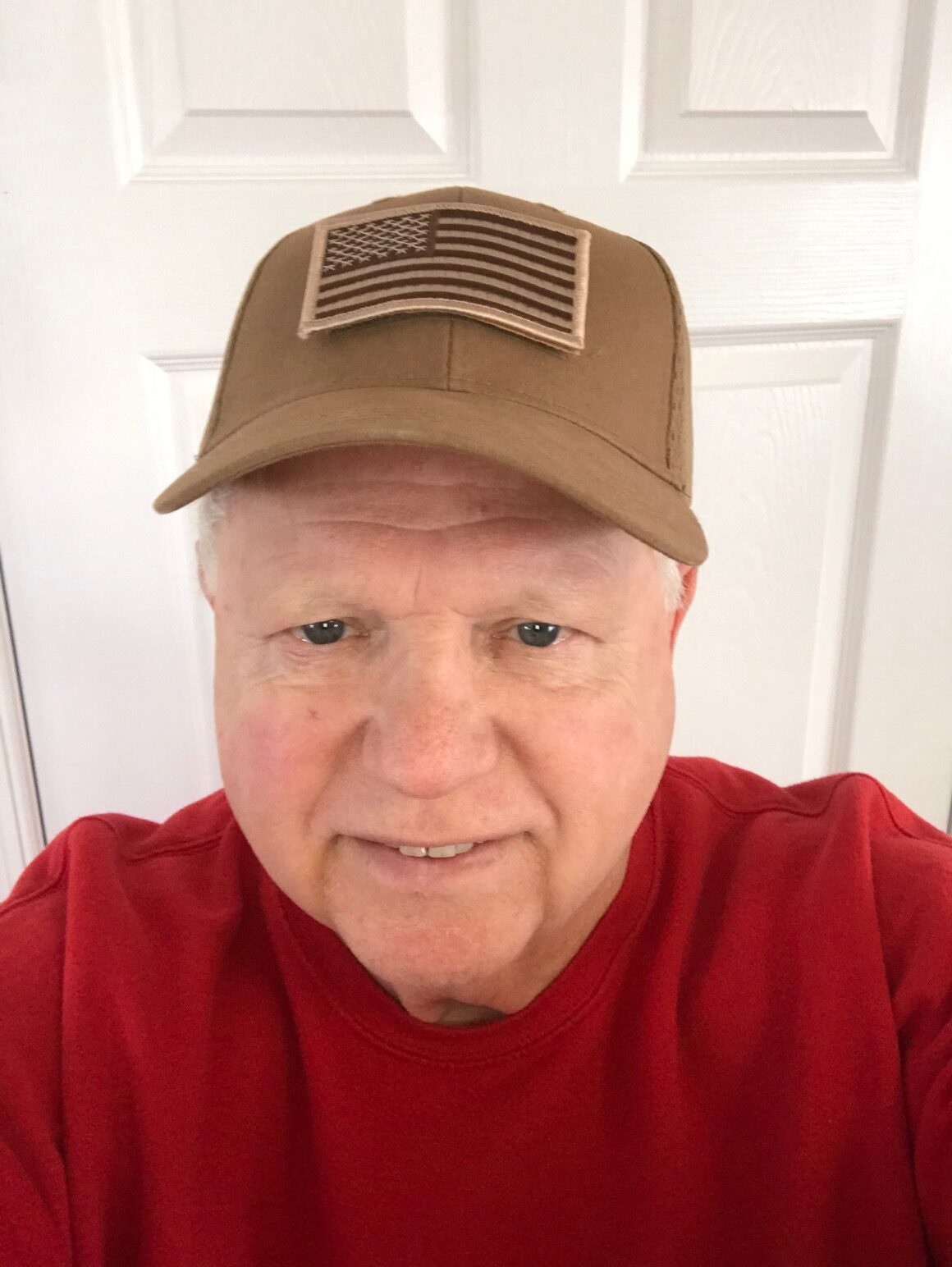
Larry Hilton, a Vietnam veteran and former Marine from Fredericksburg, Virginia, has been praying for Payne since seeing his name on the prayer calendar nearly a decade ago. “About once a quarter, Larry emails me just to say he’s praying,” Payne says. “And he’s been doing that for almost ten years.”
Those messages became so meaningful that Payne once mailed Hilton a deployment hat. Hilton responded with a photo of himself wearing it. “He’s probably in his mid-70s,” Payne said, “and he has such a heart for chaplains.”
Another faithful encourager is Amy West from Mechanicsville, Virginia. A widow, West has emailed Payne several times each year for many years, letting him know she is praying. “When Scripture talks about the role of widows in the body of Christ, I think of Amy,” Payne says.
Payne also points to Harold and Jo Moore, who live in Arizona, as long-standing prayer partners. “These individuals represent so many others. They may be part of prayer teams or missions groups in their churches, but their faithfulness has made a real difference.”
The consistency of those relationships has carried weight precisely because they require no response beyond gratitude. “They don’t ask for updates or explanations,” Payne says. “They just pray.”
Roots that Run Deep
Some connections stretch back even further. Payne and his wife were married more than 26 years ago at Floyd Springs Baptist Church in Armuchee, Georgia. Nancy DeHart, who once taught Sunday school to Payne’s children, still texts him several times a year to say she is praying.
“That’s been going on for decades,” Payne says. “She knew our boys. She loved them. And she still remembers us.”
For a chaplain whose life has been marked by constant relocation—sometimes annually, sometimes across continents—those long-term relationships offer a sense of continuity few in military life experience.
“From 2020 to 2024, we moved almost every year,” Payne said. “Sometimes on different continents. That kind of pace creates whiplash.”
In that reality, churches that stay connected with military chaplains provide something rare: stability.
A Call to the Churches
Payne believes his story highlights an opportunity for Southern Baptist churches, especially those near military installations.
“If I could ask churches to do one thing, it would be to adopt a chaplain,” he said. “Treat us like you treat your missionaries. Stay connected. Pray. Care for our families.”
He is also quick to note that chaplains are not always good at asking for help. “We’re not squeaky wheels,” Payne says. “We’re trained to fight with whatever’s in our backpack. Sometimes that means we’re too independent.”
That is why proactive relational support matters so deeply. According to Holloway, Brentwood Baptist sees that connection as non-negotiable.
“We believe relational connection is essential,” Holloway said. “We stay close through consistent communication, pastoral visits, and mission teams that serve alongside our workers. Our commitment is a lifetime pledge to walk with them as they carry out the Great Commission.”
For Payne, that promise has proven true. Whether through a handwritten letter, a quarterly email, a pastoral visit, or a prayer whispered during a Wednesday night service, Southern Baptist churches have helped sustain him in ministry.
“We may not ask for much,” Payne says, “but those prayers? They carry us. They always have.”
Learn more about chaplaincy or how you can become an SBC-endorsed chaplain.
Published January 13, 2026