

New Department of War Policy: Military Chaplains No Longer Wear Rank Insignia
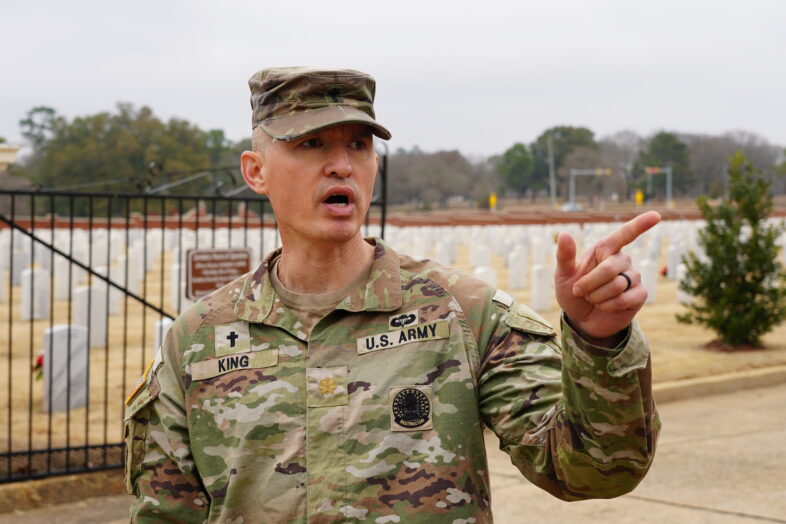
On March 25, Secretary of War Pete Hegseth posted a video on social media announcing that the rank insignia military chaplains wear on their utility or work uniforms will be replaced by the unique religious symbols of the faith group. This decision marks a significant change to a military chaplain’s uniform that has been in effect for one-hundred years.
Secretary Hegseth said the new policy “speaks to the difficult balance of the duality of a military chaplain [who] is first and foremost a chaplain, and an officer second. This change is a visual representation of that fact.” He said the removal of a chaplain’s rank from their uniform emphasizes their “divine calling” as religious leaders in the United States Armed Services.
On July 29, 1775, the Continental Congress formally authorized military chaplains for the Continental Army, initially providing them with pay equal to a captain ($20/month) but without formal military rank or official rank insignia. Beginning in 1914, chaplains were authorized to wear the rank of a commissioned officer, starting in the grade of a first lieutenant in the Army. This policy change emphasized the functional role of a military chaplain as a pastor in uniform and a commissioned officer.
During World War I, General John “Black Jack” Pershing, commander of the American Expeditionary Forces, directed that chaplains remove the insignia of grade from their uniforms, believing that soldiers would have less “reticence” about talking to a chaplain who wore no rank. However, without the insignia of rank on their uniform, chaplains found they were often regarded by commanders as “accessories with no standing and of questionable value”1 to the military.
As a result of increasing opposition, confusion, and disrespect experienced by chaplains for almost seven years over the absence of rank on their uniform, the War Department on March 19, 1926 decided to restore their rank insignia. Additionally, a Congressional Act of 1926 guaranteed for the first time in military history that chaplains were given the rank, pay, and allowances of their respective grades up to and including that of an Army colonel or Navy captain.
From 1926 to 2026 have visibly, and humbly, worn the insignia of rank on their uniform, arguably the only symbol on a military uniform members of the Armed Services are trained to recognize and render the appropriate military courtesies. Hopefully, our troops will continue to feel the same way about the chaplain’s religious insignia.
As our endorsed Southern Baptist military chaplains respond to the Secretary of War’s new policy, here are a few items that remain unchanged:
1) The military chaplaincy is a unique God-called ministry.
2) The local church establishes the vocational identity of a military chaplain.
3) The Armed Services governs the professional identity of a military chaplain (uniform standards, personal appearance, assignments, promotions, etc.).
4) Military chaplains continue to hold rank for administrative purposes (pay, privileges, performance standards, and military courtesies as a commissioned officer).
5) SBC military chaplains continue to focus on taking the Gospel to members of the Armed Services and their families.
This policy change still underscores the military chaplain’s institutional duality tension and functional role as a pastor in uniform and a commissioned officer.
Please feel free to contact our office if you would like to discuss this matter further. We sincerely want to hear from you. We are praying for you as you adjust to this historic Department of War policy. Thanks for answering the call to the chaplaincy ministry.
1 Richard Halverson, The Churches and the Chaplaincy (Atlanta: John Knox Press, 1975), p.192.